



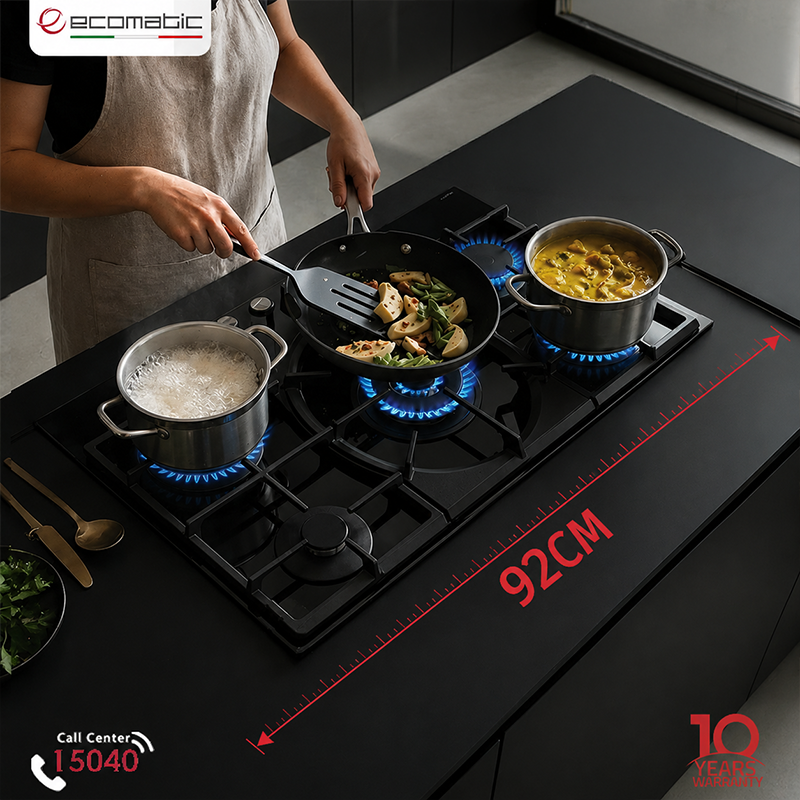
When equipping the kitchen and choosing a built-in hob, many of us get confused due to the differences in sizes. Among the most common questions we receive are: "What is the difference between a 90 cm hob and a 92 cm hob? And do these 2 cm really make a difference in use or installation?"
In this article, we will clarify the fundamental differences so you can make the right decision for your home.
1. External Dimensions and Cooking Area
90 cm hob: This is considered the most common standard size. It provides a very comfortable space for 5 burners, and you can use pots of different sizes on it at the same time.
92 cm hob: This gives you an additional 2 cm in external width. Although this difference is small, it gives an impression of luxury and a modern look, and slightly widens the spacing between the burners, which makes it easier to move large pots.
2. Cut-out (Built-in) Dimensions in the Countertop
This is the most important part you need to pay attention to:
90 cm hob: Its cut-out size in the countertop is fixed and most technicians are usually familiar with it.
92 cm hob: In most models, the internal cut-out size in the countertop is the same as the 90 cm size! The 2 cm increase is merely a "lip" or an external frame that extends over the countertop.
💡 Golden Tip: Always ask for the "Built-in dimensions catalog" from customer service before the technician cuts the countertop.
3. Burner and Hob Layout
92 cm models often come with newer designs, and sometimes the placement of the wok burner or the large triple burner is in the center or on the sides with a larger safety margin for the control knobs so they don't get hot from the grates or large pots.
